Yakety Script: When Whimsy Meets Purpose in Handwritten Typography
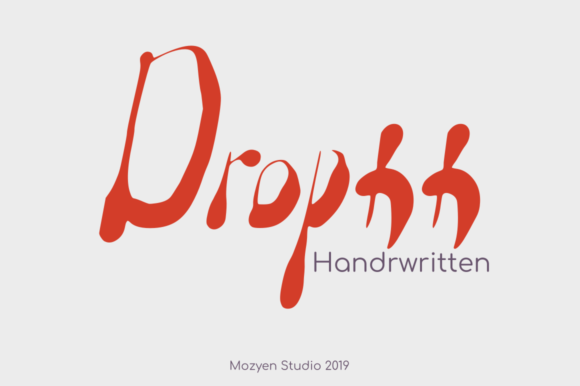
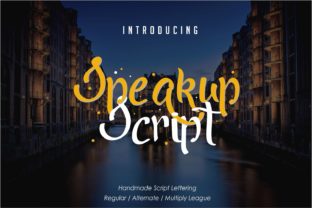
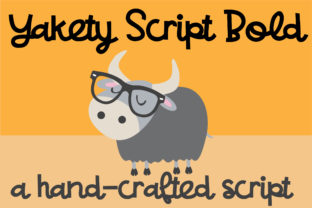
Yakety Script is a distinctive handwritten font designed to evoke the spontaneity and charm of pen-on-paper sketching—without sacrificing legibility or versatility. It’s not just “playful”; it’s intentionally crafted with uneven baseline rhythms, variable stroke weights, and subtle irregularities that mimic natural handwriting. Unlike many script fonts that lean heavily into formal calligraphy or tight cursive, Yakety Script embraces looseness: letters tilt, terminals flick upward or trail off, and spacing breathes like someone jotting notes mid-thought. That character makes it especially effective for comic-themed design projects—think speech bubbles, poster headers, zine covers, or animated UI text—but its utility extends further than nostalgia or novelty.
What Sets Yakety Script Apart From Other Handwritten Fonts
Most handwritten fonts fall into one of three broad categories: formal scripts (e.g., elegant wedding invitations), casual brush styles (often bold and textured), or lo-fi sketch fonts (intentionally rough or unfinished). Yakety Script occupies a nuanced middle ground. It avoids the stiffness of formal scripts and the visual weight of brush fonts, while retaining more structure and readability than raw sketch fonts. Its lowercase a, g, and y feature open, friendly shapes—not cramped or overly stylized—which helps maintain clarity at smaller sizes. Uppercase letters retain personality without becoming distracting, and the font includes standard OpenType features like contextual alternates, allowing characters to shift subtly depending on adjacent letters.
This balance means Yakety Script performs well where other handwritten fonts falter: in short-form display text with moderate hierarchy (e.g., a comic book title alongside body text set in a clean sans-serif), or in digital interfaces where animation or hover effects benefit from organic movement. It doesn’t try to replace a robust text face—it’s meant to complement one. That intentionality is part of what makes Yakety Script stand out among dozens of similarly named “fun” fonts: it was built for contrast, not isolation.
Fitness for Purpose: Where Yakety Script Excels—and Where It Doesn’t
Yakety Script shines in contexts where tone matters as much as information. A children’s educational app using Yakety Script for section headers—paired with a neutral, highly legible sans-serif for instructions—creates immediate warmth and approachability. Similarly, indie game developers often use it for in-universe signage, dialogue boxes, or achievement notifications because it reinforces narrative voice without demanding attention away from gameplay. Even small businesses selling handmade goods sometimes apply it sparingly to product tags or packaging accents, where it signals craft and individuality without overwhelming the message.
But those same qualities become limitations in certain settings. Yakety Script isn’t suitable for long paragraphs, legal disclaimers, data dashboards, or accessibility-critical interfaces. Its irregular rhythm and variable x-height reduce scanning efficiency, and screen readers don’t interpret stylistic variation—so relying on it for functional labels or navigation violates basic usability principles. It also lacks extended language support beyond basic Latin characters, making it impractical for multilingual publishing or global-facing applications.
In short: Yakety Script works best when used deliberately—not as a default, but as punctuation. Think of it like a well-placed exclamation point or a hand-drawn arrow: expressive, intentional, and most effective when deployed sparingly.
Comparing Approaches: Handwritten Fonts vs. Alternatives
When evaluating Yakety Script, it’s helpful to consider not just competing fonts, but alternative approaches altogether. For instance, some designers achieve similar whimsy through custom lettering—hand-drawing each headline or logo. That offers total uniqueness and perfect tonal alignment but requires time, skill, and scalability tradeoffs. Others opt for generative tools or variable fonts that simulate handwriting variation algorithmically. These offer flexibility across weights and widths but often lack the cohesive personality Yakety Script delivers out of the box.
Another path is hybrid typography: combining a simple, high-contrast sans-serif (like Montserrat or Inter) with minimal handwritten flourishes added manually—perhaps a single underlined word or a custom-drawn ampersand. This gives control over emphasis without committing to full-script dominance. Yakety Script sits between those poles: more consistent than bespoke lettering, more human than algorithmic simulation, and more integrated than piecemeal decoration.
Practical Considerations for Implementation
Before licensing Yakety Script, consider how you’ll use it—and whether your workflow supports it. It’s available in desktop and web formats, but web use requires attention to loading performance and fallback behavior. Because it’s a display font, it should never be the sole typeface in a web stack. Always define a system font stack (e.g., "Yakety Script", "Comic Sans MS", "Chalkboard SE", sans-serif) so browsers render readable text even if the primary font fails to load.
Also note licensing scope. Some versions permit unlimited web page views; others restrict usage by domain or monthly impressions. If you’re embedding Yakety Script in a mobile app or SaaS dashboard, verify whether the license covers dynamic rendering or user-generated content—scenarios where font files may be accessed unpredictably.
When to Choose Yakety Script—and When to Look Elsewhere
Yakety Script is likely the right choice if you need a handwritten aesthetic that feels authentic but remains legible, supports light typographic hierarchy, and aligns with a lighthearted, creative, or youth-oriented brand voice. It fits naturally in comic-inspired projects, classroom materials, playful branding, or editorial illustrations where tone and texture reinforce meaning.
It’s less appropriate if your project demands neutrality (e.g., financial reporting tools), strict accessibility compliance (WCAG AA/AAA for body text), multilingual support beyond English and Western European languages, or high-density information layouts (dashboards, tables, code documentation). In those cases, pairing a highly legible sans-serif with thoughtful iconography or color cues often communicates more effectively than any handwritten font could.
You might also reconsider Yakety Script if your team lacks typographic experience. Misusing it—such as setting paragraph text at 14px, stacking multiple script fonts, or applying heavy tracking—can undermine credibility faster than choosing a “safer” option. Good typography isn’t about avoiding risk; it’s about understanding which risks serve the audience and which distract from it.
Realistic Examples in Context
- A science outreach nonprofit uses Yakety Script for podcast episode titles (“How Do Octopuses Dream?”) while keeping show notes in a clear, accessible sans-serif—making episodes feel inviting without compromising readability.
- An independent comic publisher applies Yakety Script only to cover logos and chapter headings, reserving a sturdy serif (like Merriweather) for interior dialogue and narration—preserving pacing and reducing visual fatigue across 100+ pages.
- A teacher designing printable worksheets uses Yakety Script for instruction headers (“Your Mission:”) but switches to a dyslexia-friendly sans-serif (like OpenDyslexic) for all task text—balancing engagement with cognitive accessibility.
None of these examples treat Yakety Script as a solution in itself. Instead, they position it as one tool among many—valued for its distinct voice, but chosen only after weighing purpose, audience, medium, and constraints.
Making an Informed Decision
Choosing Yakety Script—or deciding against it—comes down to alignment, not aesthetics alone. Ask yourself: Does this font clarify, rather than complicate, the message? Does it reflect how the audience expects to engage with the content—not how we wish they would? Does it integrate cleanly into existing systems, or will it require workarounds that erode consistency over time?
There’s no universal “best” handwritten font. There’s only the best fit for a specific goal, audience, and context. Yakety Script earns its place when whimsy serves function—not when it substitutes for it. Used thoughtfully, it adds humanity to digital spaces that often feel too polished or impersonal. Used carelessly, it can obscure meaning behind charm. The difference lies not in the font itself, but in how deliberately it’s applied.