Hitterlove: The Handwritten Font That Feels Like a Personal Note
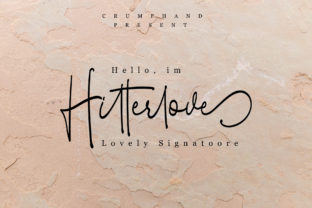
Imagine opening a wedding invitation and feeling that quiet, warm flutter—because the names aren’t set in sterile type, but in something soft, intentional, and unmistakably human. That’s Hitterlove at work. It’s not just another handwritten font. It’s an expressive, subtly refined script with gentle curves, natural rhythm, and just enough variation to feel authentically hand-drawn—without sacrificing readability or polish.
Where Hitterlove Fits Naturally (and Where It Doesn’t)
Hitterlove shines when authenticity matters more than uniformity. Think of it as the visual equivalent of speaking with warmth instead of reading from a script. It works best where personality, care, or emotional resonance is part of the message—not where speed, scanning, or strict branding guidelines demand absolute consistency.
You’ll see it used thoughtfully on boutique product labels, heartfelt teacher appreciation cards, Instagram story overlays for small-batch bakers, and even subtle headers in digital newsletters aimed at creative professionals. What it doesn’t do—and shouldn’t be asked to—is replace clean sans-serifs in legal disclaimers, dense blog body text, or mobile app navigation. Its strength lies in moments of pause, not flow.
Real-Life Uses You’ll Recognize
- Small business owners use Hitterlove for custom packaging stickers—say, on a jar of lavender honey or handmade soap. A short phrase like “Hand-poured with care” in Hitterlove feels personal, not promotional. Customers report noticing it first, then pausing longer before putting the item down.
- Educators print classroom posters with encouraging phrases (“You’ve got this,” “Mistakes help your brain grow”) in Hitterlove. Students consistently describe these as “friendly” and “less scary” than bold block letters—especially helpful in early literacy spaces or inclusive classrooms.
- Bloggers and content creators layer Hitterlove over lifestyle photos for Pinterest pins or Instagram carousels. One freelance writer told us she uses it only for pull quotes—not headlines or captions—because it gives her words the weight of a quiet conversation, not a broadcast.
- Wedding designers and couples planning DIY stationery choose Hitterlove for place cards, ceremony programs, and thank-you notes. It bridges elegance and approachability—formal enough for black-tie events, warm enough for backyard gatherings.
- Freelance designers keep Hitterlove in their toolkit for client projects where brand voice leans empathetic: mental health coaches, holistic practitioners, independent bookshops, or local makers’ markets. It helps convey care without cliché.
Why It Works Where Other Handwritten Fonts Fall Short
Not all handwritten fonts age well—or translate across devices. Some look too stiff, others too chaotic. Hitterlove balances three things many scripts miss: legibility at small sizes, consistent spacing between letters, and natural-looking variation (like slightly different ‘a’ or ‘e’ forms) that avoids robotic repetition.
That means it holds up on a tiny embroidered tote tag, stays clear in a PDF download viewed on a phone, and doesn’t distract in a printed brochure where it shares space with cleaner typefaces. It doesn’t shout—it invites attention gently.
What to Consider Before You Use It
Think about contrast. Hitterlove sings when paired with something grounded—a neutral sans-serif like Inter or Lato for body text, or even a sturdy serif like Merriweather for longer passages. Using it alongside other decorative fonts often dilutes its impact.
Check your platform limitations. If you’re designing for web, confirm whether Hitterlove supports web font loading (many free versions don’t). For Canva users: yes, it’s available in the Pro library—but avoid using it in dynamic text boxes that auto-resize; spacing can tighten unpredictably.
Test legibility in context. Try it at the size and color you plan to use—not just in the font menu. A light gray Hitterlove on off-white paper may vanish on screen or fade in print. Dark charcoal or deep navy usually works better than pure black, which can feel harsh against its soft edges.
Respect hierarchy. Because it carries so much tone, Hitterlove works best for one key element per layout: a headline, a quote, a name, or a short call-to-action. Overuse flattens its effect—like smiling constantly during a serious conversation.
Who Benefits Most—and How
Creatives building personal brands find Hitterlove especially useful when their work revolves around trust and nuance—coaches, therapists, artists, writers. It signals openness without sacrificing professionalism. One illustrator told us she uses it only for her email signature and workshop titles: “It tells people I’m present, not performative.”
Entrepreneurs launching physical products appreciate how Hitterlove elevates unboxing. A customer receiving a candle with a Hitterlove-stamped dust bag doesn’t just see branding—they register intention. That subtle shift influences reviews, repeat purchases, and word-of-mouth referrals.
Hobbyists and educators value its accessibility. Unlike some script fonts requiring OpenType features or ligature toggles, Hitterlove works reliably in basic tools like Google Slides, Microsoft Word, and even Cricut Design Space—no technical setup needed. You type, and it flows.
Marketers running seasonal campaigns lean into Hitterlove for limited-time messaging—think “Holiday Hours” on a café chalkboard graphic or “Spring Collection” on an email banner. Its warmth aligns with seasonal sentiment without leaning into kitsch.
A Quiet Tool With Real Impact
Hitterlove isn’t about standing out at all costs. It’s about standing *in*—in the moment, in the relationship, in the intention behind what you’re sharing. You won’t see it on tech startup homepages or stock trading dashboards, and that’s by design. Its power lives in the spaces where people slow down: a handwritten note tucked into a gift box, a student’s name highlighted on a progress chart, a local shop’s new menu board, a therapist’s waiting room poster.
When chosen with purpose—not just because it’s “pretty”—Hitterlove becomes part of the message itself. It says, This was made for you, not just sent to you. And in a world full of automated replies and algorithm-driven feeds, that kind of quiet sincerity still cuts through.