Beautiful Mess: Hand-Crafted Script for Real Life
If you’ve ever stared at a blank page, screen, or design mockup and felt that quiet tension between authenticity and polish—you’re not alone. Beautiful Mess isn’t trying to fix that tension. It embraces it. This casual hand-crafted script has a medium weight and makes a great font for crafting, writing, and more—not because it’s perfect, but because it feels human, approachable, and intentionally unrefined.
What Makes Beautiful Mess Stand Out
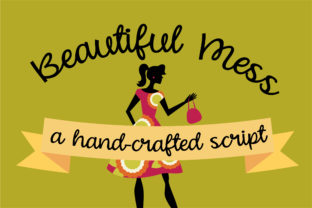
Beautiful Mess is a script font designed with organic rhythm in mind. Its letters flow like ink pulled across textured paper—slight variations in stroke thickness, subtle irregularities in baseline alignment, and gentle, natural connections between characters. Unlike tightly kerned, digitally uniform scripts, it breathes. That’s its strength: it doesn’t shout. It invites.
It’s not overly decorative, nor does it sacrifice legibility for charm. The medium weight gives it presence without heaviness—ideal for both small captions and larger display use. And because it’s hand-drawn (not algorithmically smoothed), it avoids the sterile predictability that can make many script fonts feel cold or generic.
Where Beautiful Mess Fits—And Why It Works
This isn’t just another “cute” font for wedding invites. Beautiful Mess thrives where personality matters more than precision. Think of it as your visual voice when you want warmth, sincerity, or quiet confidence—not perfection.
- Branding & Small Business: A local coffee roaster uses Beautiful Mess for their seasonal menu board—paired with a clean sans-serif for body text—to signal craft, care, and consistency without pretension. Customers don’t just read the specials—they feel the intention behind them.
- Educational Materials: Teachers and curriculum designers apply Beautiful Mess to handouts, reflection prompts, or classroom posters. Its gentle irregularity softens academic rigidity, making content feel more accessible—especially for neurodiverse learners or younger audiences.
- Digital Content: Bloggers and newsletter writers use it sparingly—for section headers, quote pulls, or signature lines—to add texture without compromising readability on screen. At 24–32px size and with generous line height, it holds up well even on mobile.
- Creative Projects: Journalers, bullet planners, and mixed-media artists print or trace Beautiful Mess lettering into physical layouts. Its natural spacing and open counters make it forgiving to adapt by hand—or layer digitally over watercolor scans and grainy textures.
Pairing It Right: ZP Beautiful Mind Is Its Natural Counterpart
Beautiful Mess shines brightest when paired thoughtfully—and its sister font, ZP Beautiful Mind, is built for exactly that. Where Beautiful Mess flows, Beautiful Mind grounds. It’s a clean, friendly, slightly rounded print face—designed to complement, not compete. Together, they create visual harmony: one speaks, the other listens.
Use Beautiful Mess for headlines, quotes, or callouts; switch to Beautiful Mind for body copy, labels, or supporting text. No forced contrast—just intuitive balance. You’ll notice how quickly hierarchy emerges, how easily tone settles, and how little effort it takes to guide attention where it matters.
Real-World Considerations Before You Commit
Like any expressive typeface, Beautiful Mess works best when matched to purpose—not just aesthetics. Here’s what experienced designers and communicators keep in mind:
- Legibility first: Avoid using it below 16px in digital interfaces or for long paragraphs. Its connected forms and variable spacing aren’t built for dense reading—save it for moments that need emphasis, not explanation.
- Test with real content: Try setting actual headlines or taglines—not just “The quick brown fox.” Does the word “Wednesday” flow? How does “email” look? Some letter combinations behave differently in practice than in specimen sheets.
- Consider your audience’s context: A healthcare nonprofit might use Beautiful Mess for patient-facing wellness tips (softening clinical language), but avoid it in consent forms or medication instructions where clarity is non-negotiable.
- Licensing matters: Confirm usage rights before embedding in apps, SaaS dashboards, or client deliverables. Some versions allow web use with proper CSS @font-face setup; others are desktop-only. When in doubt, check the foundry’s license terms—not just the download page.
More Than a Font—A Design Mindset
Choosing Beautiful Mess signals something deeper than typographic preference. It reflects a choice to value connection over conformity, authenticity over automation, and resonance over repetition. In a world saturated with AI-generated visuals and templated messaging, fonts like this quietly resist homogenization—not by being loud or flashy, but by staying tenderly, unmistakably human.
That’s why illustrators sketch over its outlines, educators print its alphabet cards for tactile learning, and marketers use it in email subject lines that stand out—not because they’re louder, but because they feel like they were written for someone, not at an audience.
A Few Practical Tips to Get Started
You don’t need a full brand refresh to begin. Start small:
- Add Beautiful Mess as a custom font in Canva or Figma for one recurring element—like your newsletter’s “From the Studio” header.
- Print a single quote in Beautiful Mess + Beautiful Mind on matte cardstock, then photograph it with natural light for Instagram Stories.
- Use it in your Notion dashboard sidebar titles—paired with a neutral sans—to bring warmth to daily workflows without distraction.
- If you're designing a workshop handout, set learning objectives in Beautiful Mess and key takeaways in Beautiful Mind. Watch how participants’ eyes linger longer—and recall more.
Beautiful Mess won’t solve every design challenge. But when used with intention, it helps people pause, lean in, and remember—not just what was said, but how it felt to receive it.