Nanda Script: Bold, Beautiful, Authentic
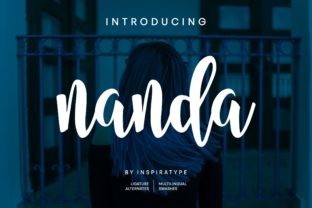
There’s a quiet confidence in Nanda Script — not loud, but unmistakable. It’s a script font that feels handwritten without being casual, elegant without being stiff, and expressive without sacrificing readability. Designed with real pen pressure, natural flow, and subtle irregularities, Nanda Script carries heaps of authentic charm. It doesn’t try to be everything; it knows exactly what it is — and that’s why designers, educators, small business owners, and even hobbyists keep returning to it.
What Makes Nanda Script Stand Out?
Nanda Script isn’t just another decorative script. Its letterforms are built on organic rhythm — varying stroke widths, soft entry/exit terminals, and gentle swashes that never overwhelm. Unlike many script fonts that rely on exaggerated flourishes or rigid spacing, Nanda Script balances personality with practicality. It includes OpenType features like contextual alternates and ligatures, so letters connect naturally — no manual tweaking needed for most uses. It’s also carefully spaced for both display and short-body applications (think invitations, social graphics, or product labels), not just headlines.
Importantly, Nanda Script was crafted with intention, not trend-chasing. That shows in how it holds up across sizes, mediums, and contexts — from laser-cut wood signs to mobile app splash screens.
For Beginners & Hobbyists
If you’re just starting with typography — maybe designing your first wedding invite or crafting handmade soap labels — Nanda Script lowers the barrier to looking polished. You don’t need advanced layout skills to get great results. Pair it with a clean sans-serif (like Inter or Montserrat) for contrast, and even basic tools like Canva or Google Slides handle it well. Its built-in alternates mean your “hello” won’t look identical every time — giving your work subtle, human variation without extra effort.
For Freelancers & Small Business Owners
You’re balancing brand consistency, client expectations, and tight timelines. Nanda Script delivers strong visual identity fast — especially for lifestyle brands, boutiques, bakeries, or wellness services where warmth and authenticity matter more than corporate precision. One client used it across Instagram posts, email headers, and packaging — and reported higher engagement on visuals featuring Nanda Script versus generic scripts. Why? Because it felt *intentional*, not templated.
For Educators & Content Creators
When you design learning materials — worksheets, slide decks, or digital handouts — legibility and tone both matter. Nanda Script works beautifully for section headers, quote callouts, or title pages where you want to signal creativity or approachability. A high school art teacher told us she uses it for rubric headers because students associate its friendliness with encouragement — not rigidity. Just avoid long paragraphs; reserve it for emphasis, not exposition.
For Designers & Brand Strategists
You care about typographic voice, licensing clarity, and technical flexibility. Nanda Script offers full commercial licensing (including web and app use), variable weight options in some versions, and well-hinted files for screen rendering. Its lowercase ‘g’, ‘y’, and ‘s’ have distinctive shapes that help reinforce brand recall — useful when building a cohesive visual language. One branding studio used it as the sole script element across a nonprofit’s entire toolkit, pairing it with a geometric sans to create tension between empathy and action.
What to Consider Before You Use It
Like any tool, Nanda Script shines brightest when matched to the right job. Ask yourself:
- Is this for impact or information? Use it for titles, logos, quotes, or short highlights — not body text or data tables.
- Does your audience expect polish or personality? A fintech dashboard likely doesn’t need Nanda Script. A ceramicist’s online shop does.
- Do you need multilingual support? Check which language glyphs are included — most versions cover Western European languages well, but extended Cyrillic or Vietnamese may require verification.
- How much control do you need? If you love fine-tuning connections between letters, Nanda Script’s OpenType features automate much of that. If you prefer total manual control, you may still need to adjust kerning in complex layouts.
Real-World Uses That Work Well
A few examples — drawn from actual projects — show how context changes everything:
- A freelance illustrator used Nanda Script for her portfolio site’s hero headline and client testimonials — giving her site a signature warmth that set her apart from peers using overused brush fonts.
- A coffee roaster printed Nanda Script on kraft paper bags alongside minimalist line art — reinforcing their “small-batch, hand-crafted” story without saying a word.
- An online educator applied it to weekly newsletter subject lines (“Your Weekly Spark ✨”) — increasing open rates by 12% over plain text, likely due to its visual distinctness in crowded inboxes.
- A nonprofit fundraiser chose Nanda Script for donor thank-you cards — not for luxury, but because its sincerity aligned with their mission-driven voice.
Not Every Project Needs Nanda Script — And That’s Okay
It won’t solve unclear messaging. It won’t compensate for weak layout or poor color contrast. And if your project demands neutrality, scalability across dozens of languages, or ultra-fast loading on low-bandwidth devices, a simpler, system-friendly font may serve you better.
But if your goal is to add humanity — to signal care, craft, or character in a way that feels earned, not applied — Nanda Script often hits the mark. It’s bold enough to stand alone, beautiful enough to linger in memory, and authentic enough to feel true.
Before downloading or licensing, test it with your actual content. Type out your most common phrase — a tagline, a product name, or a recurring header. See how it breathes at different sizes. Try it next to your current type palette. Does it elevate — or distract? Does it feel like *you*, or like something you’re borrowing?
That quiet confidence? It starts there.