Mondella: Playful & Elegant Handwritten Font
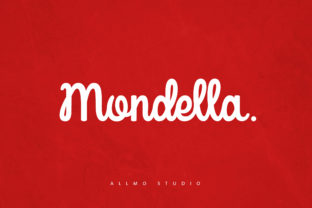
Mondella is a handwritten typeface that feels both joyful and refined—like a thoughtful note from a friend who also happens to have impeccable taste. It’s not overly casual, nor is it stiff or formal. Instead, Mondella strikes a rare balance: it invites warmth and personality while maintaining visual sophistication.
What Makes Mondella Stand Out
Unlike many script fonts that lean too far into whimsy or formality, Mondella uses natural stroke variation, subtle flourishes, and gentle rhythm to create movement on the page. Letters connect smoothly but never feel forced or mechanical. There’s a light bounce in the baseline, a softness in the curves, and just enough irregularity to feel authentically human—without sacrificing legibility.
It’s designed with versatility in mind. Whether you’re typing a short headline or a longer quote, Mondella retains charm without becoming hard to read—even at smaller sizes. That’s especially helpful for digital use, where clarity matters as much as character.
Where You’ll Love Using Mondella
Think about moments when your design needs to feel personal, intentional, and memorable. That’s where Mondella shines.
- Branding for small businesses: A local bakery, handmade jewelry shop, or wellness coach can use Mondella in their logo or social bios to signal approachability and care—without looking unprofessional.
- Digital content: Blog headers, Instagram story text overlays, or email newsletter subject lines gain instant warmth with Mondella. Pair it with a clean sans-serif (like Inter or Lato) for contrast and balance.
- Printed materials: Wedding invitations, thank-you cards, or workshop handouts benefit from its tactile, handwritten feel—especially when printed on textured paper.
- Educational resources: Teachers and course creators use Mondella for titles or section dividers in PDF workbooks to make learning materials feel more inviting and less intimidating.
One creator recently used Mondella for her online plant shop’s “Care Tips” series—pairing it with simple line-drawn icons. Customers told her the tone felt “like advice from someone who truly loves plants.” That’s Mondella’s quiet superpower: it helps ideas land with empathy.
Practical Tips for Getting Started
If you’re new to using script fonts—or Mondella specifically—here are a few grounded observations to help you get comfortable quickly:
- Start with hierarchy. Use Mondella for headlines, quotes, or callouts—not body text. Let it lead, then step back and let a neutral font carry the rest.
- Watch letter spacing. Some versions of Mondella include built-in OpenType features like contextual alternates or ligatures. Try enabling them in design apps (like Figma or Adobe Illustrator) to see how letters flow more naturally together.
- Test across devices. Preview how Mondella renders on mobile screens. Its elegance holds up well, but avoid ultra-thin weights or very tight tracking in small UI elements like buttons or captions.
- Consider licensing early. Mondella is available in both free and premium versions. The paid version often includes extra weights, language support (like extended Latin or Cyrillic), and commercial usage rights—important if you’re designing for clients or selling products.
Why It Fits So Many People—and Projects
Whether you’re launching your first Etsy store or redesigning your school’s event posters, Mondella meets you where you are. It doesn’t assume expertise—but it also doesn’t talk down. Its appeal lies in how easily it adapts: a freelancer might use it to sign off client emails with flair; a nonprofit might choose it for campaign banners to soften serious messaging; a parent could use it to label kids’ art supplies with a smile.
What ties those uses together isn’t just aesthetics—it’s intention. Mondella supports goals like building trust, encouraging connection, or simply making something feel *made for people*, not algorithms or templates.
Things to Keep in Mind Before You Commit
Mondella isn’t meant to solve every typographic need—and that’s okay. Here’s what helps ensure it works well for your context:
- Readability over decoration. If your audience includes older readers or those with visual preferences, test Mondella at real-world sizes before finalizing layouts.
- Pairing matters. Avoid pairing Mondella with other highly decorative scripts. A simple, well-proportioned sans-serif or even a gentle serif (like Merriweather or Cormorant Garamond) will let Mondella breathe and stand out.
- Consistency builds recognition. Using Mondella in one place (say, your logo) and nowhere else can feel random. Try applying it to two or three consistent touchpoints—like your website hero text, email signature, and packaging sticker—to reinforce brand voice.
- It’s not a substitute for strategy. A beautiful font won’t fix unclear messaging or poor user experience. Use Mondella to elevate what’s already working—not to mask gaps.
One educator shared how she began using Mondella only for student feedback notes—“Great idea!” or “Try this next”—and noticed students responded more positively to written comments than before. She didn’t change the words—just how they looked. That small shift in tone made space for encouragement to land more gently.
A Font That Grows With You
Mondella is flexible enough for quick experiments and thoughtful enough for long-term projects. You don’t need advanced design skills to start—just an idea you want to share with warmth and sincerity. It works whether you're sketching a concept on paper or fine-tuning a Shopify homepage.
And because it’s rooted in handwriting—not rigid geometry—it leaves room for imperfection, which makes it feel honest. In a world full of polished templates and AI-generated sameness, Mondella quietly reminds us that personality has value. Not as decoration—but as connection.