Ink Scribble: The Playful, Authentic Decorative Font That Turns Everyday Projects Into Expressive Moments
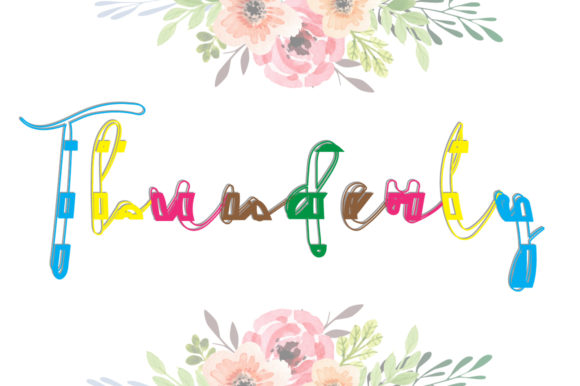
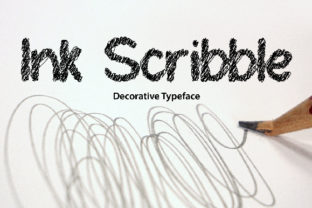
Imagine handwriting that breathes—slightly uneven, full of personality, and unmistakably human. That’s Ink Scribble: a decorative font built from real scribbles, not algorithmic curves. It doesn’t try to be perfect. It leans into wobbles, overlaps, and unexpected flourishes—making it feel less like typography and more like a friend jotting something down just for you.
Where Ink Scribble Fits in Real Life (Not Just Design Mockups)
This isn’t a font you reach for when drafting a quarterly report or labeling a spreadsheet. Ink Scribble shines where authenticity matters more than uniformity. Think of it as the visual equivalent of a warm, off-the-cuff voice note instead of a polished podcast script.
Small business owners use Ink Scribble on handmade product tags—think ceramic mugs, soy candles, or pressed-flower greeting cards. Its irregular baseline and organic stroke weight mimic actual pen-on-paper energy, reinforcing the “handmade with care” message without needing extra copy.
Teachers and educators slip it into classroom posters for vocabulary walls or reading corner signs. One 3rd-grade teacher told us she uses it for “Word of the Week” headers because kids pause, point, and say, “That looks like *my* writing!”—which builds connection before the lesson even begins.
Event planners lean on Ink Scribble for wedding signage, baby shower banners, or birthday party invites where “cute but not cloying” is the goal. Unlike overly bubbly script fonts, Ink Scribble keeps its charm grounded—it feels joyful, not saccharine. A real-world example: a couple used it for their “Welcome to Our Backyard Wedding” chalkboard sign—and guests snapped over 40 photos of it before the ceremony started.
Who Benefits Most—and How Their Needs Shape the Choice
Creative freelancers (illustrators, lettering artists, social media designers) often license Ink Scribble as a “base layer” for custom illustrations. They’ll type a phrase in Ink Scribble, then trace over it with a stylus—keeping the rhythm and gesture intact while adding personal flourishes. It saves hours compared to building letterforms from scratch.
Non-designers—like café owners updating their seasonal menu board or nonprofit staff designing a community event flyer—appreciate how little tweaking it needs. No kerning adjustments required. No fear of looking “off.” It works straight out of the font menu in Canva, Google Slides, or Adobe Express. One local bookstore owner said she swapped her generic script font for Ink Scribble on Instagram story highlights—and saw a 22% lift in profile visits over three weeks. “People told me the stories felt ‘more like us,’” she shared.
Brands with a gentle, approachable voice—think indie skincare lines, mindfulness apps, or neighborhood bakeries—use Ink Scribble selectively: never for body text, but for taglines (“Baked Fresh Daily”), section dividers (“Our Story”), or limited-edition packaging accents. It adds warmth without sacrificing clarity.
When to Reach for Ink Scribble (and When to Pause)
It excels in short-form, high-impact moments: headlines, logos (especially for lifestyle or artisanal brands), social media graphics, hand-lettered-style web banners, and printed ephemera like postcards or recipe cards.
But here’s what’s equally important: Ink Scribble isn’t built for long paragraphs, legal disclaimers, or accessibility-first interfaces. Its decorative nature means lower legibility at small sizes (<14px) and reduced screen readability for users relying on screen readers (it lacks robust OpenType features like stylistic sets or language-specific glyphs). If your project needs WCAG AA compliance or serves an older or visually impaired audience as a primary user group, pair it thoughtfully—use it only for large, standalone text elements, and always provide clear fallbacks in your CSS or design system.
Also worth noting: Ink Scribble has a distinct mood. It reads as friendly, spontaneous, and quietly confident—not formal, corporate, or tech-forward. So if you’re designing a fintech dashboard or a university research grant application, this font will feel tonally misaligned, no matter how beautifully rendered.
Practical Tips That Save Time and Avoid Regrets
- Test it in context, not isolation. Don’t judge Ink Scribble by typing “The Quick Brown Fox” in a blank document. Paste it into your actual layout—over a photo background, beside your brand colors, next to your body font. Does it hold its own? Does it feel like part of the conversation?
- Pair it with a calm, neutral companion. Ink Scribble sings when balanced with a clean sans-serif (like Inter, Lato, or even system fonts like Segoe UI or San Francisco). Avoid pairing it with other decorative or script fonts—that creates visual noise, not harmony.
- Respect its scale. Use it at 24px minimum for web headings, 36pt+ for print posters. Its charm lives in its texture—shrink it too far, and those delightful imperfections blur into illegibility.
- Check licensing early. Ink Scribble is available under both desktop and web licenses—but if you’re embedding it in a SaaS platform, email newsletter template, or mobile app, confirm the license covers that use. Some versions allow unlimited web page views; others cap monthly impressions.
Why “Playful” Doesn’t Mean “Unserious”
There’s a quiet power in choosing a font that refuses to blend in. In a world saturated with sleek, algorithmically optimized visuals, Ink Scribble signals intention: *This was made for people, not pixels.* It’s used by therapists printing affirmation cards for clients, by indie game devs naming quirky in-game items (“Scribbleberry Jam,” “Wobble-Wand”), and by podcasters designing merch that feels like a physical extension of their voice.
Its authenticity isn’t accidental—it’s engineered. Each glyph was drawn by hand, scanned, traced with intention (not auto-traced), and refined to preserve natural pressure variation and directional flow. That’s why “A” and “a” don’t feel like mirrored twins—they feel like siblings who share DNA but have different habits.
If you’ve ever hesitated to add personality to a project because you worried it might look “unprofessional,” consider this: professionalism isn’t about erasing humanity. It’s about showing up with clarity, care, and consistency. And sometimes, that starts with a single, honest scribble.