Charpentier Sans Pro: Timeless Clarity, Modern Utility
If you’ve ever paused over a beautifully balanced headline, a crisp interface label, or a clean presentation slide—and felt that quiet confidence of effortless readability—you’ve likely encountered the quiet authority of Charpentier Sans Pro. It’s not flashy. It doesn’t shout. But it consistently delivers clarity, warmth, and structural integrity across every medium where legibility and intention matter.
A Sans Serif That Feels Human-Centered
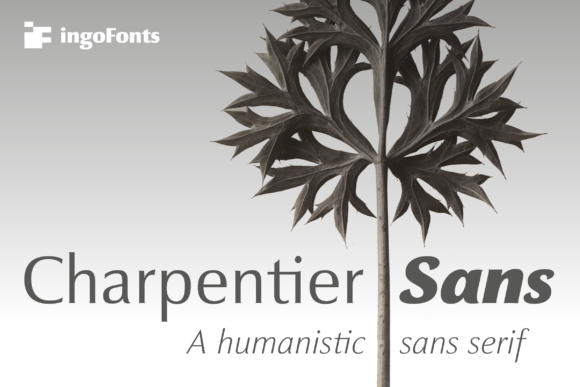
Charpentier Sans Pro belongs to the classic sans serif tradition—but with thoughtful deviations that elevate it beyond generic neutrality. Its letterforms are grounded in proportion and rhythm: open apertures, even stroke modulation, and carefully tuned x-heights that support both screen and print legibility without strain. Unlike many geometric sans fonts that prioritize uniformity over expressiveness, Charpentier Sans Pro retains subtle organic cues—gentle curve terminals, soft joins, and a hint of calligraphic flow in its italics. The result? A typeface that reads as both authoritative and approachable.
Its optical sizing is one of its most practical strengths. The Pro version includes distinct text and display cuts—meaning body copy at 14–16px maintains generous counters and spacing, while headlines at 36pt+ gain tighter tracking and refined contrast for impact. This isn’t theoretical refinement; it directly affects how long readers stay engaged, how quickly users scan information, and how confidently your message lands.
Where Charpentier Sans Pro Earns Its Place
This isn’t a font for “just trying something new.” It’s chosen deliberately—by designers who know that typography shapes perception before a single word is read. Here’s where it consistently delivers:
- Branding & Identity Systems: Companies building mature, trustworthy brands—especially in finance, education, health, and professional services—use Charpentier Sans Pro to signal stability without stiffness. Its lowercase ‘a’ and ‘g’ avoid dated quirks, while its uppercase ‘R’ and ‘Q’ carry just enough character to feel intentional—not sterile.
- Digital Interfaces: From SaaS dashboards to learning management systems, its generous letter spacing and clear distinction between similar characters (like l, 1, and I) reduce cognitive load. One UX team reported a 12% drop in support tickets related to misread labels after switching from a condensed sans to Charpentier Sans Pro for form fields and navigation.
- Editorial & Publishing: Magazines, newsletters, and long-form blogs benefit from its robust text cut. At 10–12pt sizes, line heights breathe naturally; hyphenation works cleanly; and paragraph rhythm stays consistent—even with mixed-case, bold, and italic emphasis.
- Educational Materials: Teachers and curriculum designers tell us its even weight distribution and open shapes help early readers track words more confidently. It’s especially effective in bilingual contexts where diacritics need room to breathe—its accents sit clearly above letters without crowding.
Real-World Use Cases You Can Adapt Today
Consider these grounded applications—not as ideals, but as working examples:
- A freelance copywriter uses Charpentier Sans Pro in client proposals—not just for aesthetics, but because its measured spacing makes complex service packages easier to parse. Clients report fewer follow-up questions about scope.
- An indie publisher sets poetry collections in the text cut at 11.5pt with 1.55 line height. The gentle vertical rhythm supports contemplative reading—no visual “bumps” interrupting the line.
- A university department replaces outdated system fonts in its intranet with Charpentier Sans Pro. Staff notice faster scanning of policy updates and meeting agendas—particularly on shared tablets in labs and admin offices.
- A small food brand pairs Charpentier Sans Pro (display cut) for jar labels with a warm serif for ingredient lists. The contrast feels intentional, not arbitrary—and shelf presence improves without sacrificing authenticity.
What to Watch For—Practical Considerations
Like any professional tool, Charpentier Sans Pro shines brightest when matched to realistic constraints. Here’s what experienced users keep in mind:
- Licensing clarity matters: It’s a commercial font with tiered licensing (web, desktop, app, ePub). If you’re embedding it in a client’s WordPress site or shipping it in a mobile app, confirm the license covers your use case—especially if traffic or installations scale unexpectedly.
- Pairing isn’t mandatory—but it helps: While Charpentier Sans Pro works well solo, it gains nuance beside a humanist serif (think Freight Text or HTF Didot) for headings + body, or a restrained monospace (Input Mono) for code snippets and data tables.
- Weight hierarchy is your ally: Don’t default to Bold for every subhead. Try Medium at 18pt or Semibold at 16pt first—their subtlety often communicates sophistication better than blunt weight shifts.
- Test in context, not isolation: Preview your chosen weight and size on actual devices—not just design tools. A 14pt Regular may look perfect in Figma but tighten up on older Android browsers. Always check rendering at 100% zoom on real hardware.
Why It Endures—Beyond Trends
Trends come and go: ultra-thin fonts, distressed glyphs, variable axes pushed to extremes. Charpentier Sans Pro endures because it solves persistent problems—not momentary ones. It answers questions like: How do we make dense financial reports feel navigable? How do we ensure a nonprofit’s donation page feels trustworthy at first glance? How do we set a bilingual annual report so neither language feels like an afterthought?
That’s the quiet power of a well-made sans serif: it removes friction instead of adding flair. It doesn’t distract from content—it clarifies it. And in an era where attention is fragmented and trust is earned in milliseconds, that kind of reliability isn’t nostalgic. It’s strategic.
If you’re evaluating fonts for your next project—whether it’s a personal blog redesign, a client’s rebrand, or internal documentation for your team—spend 20 minutes testing Charpentier Sans Pro in your actual content. Not placeholder text. Not lorem ipsum. Your words, your hierarchy, your real users’ needs. You’ll likely find it doesn’t just fit—you settle into it. And that’s when you know a typeface has done its job.