Apache: A Distinctive Sans Serif with Character and Clarity
Apache isn’t just another sans serif font—it’s a carefully considered typographic voice that balances modern simplicity with subtle personality. Designed for readability without sacrificing distinction, Apache stands out in a landscape where many contemporary typefaces lean heavily into neutrality or trend-driven minimalism. It’s the kind of font you notice not because it shouts, but because it feels intentional, grounded, and quietly confident.
What Sets Apache Apart
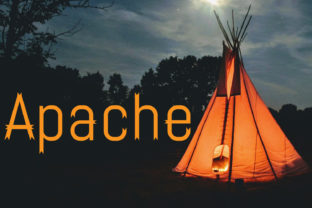
At its core, Apache is a humanist sans serif—meaning its letterforms reflect organic movement and variation in stroke width, rather than strict geometric uniformity. This gives it warmth and rhythm, especially at text sizes. The lowercase a, g, and e carry gentle open apertures and soft terminals; capitals have modest contrast and slightly flared stems. These aren’t decorative flourishes—they’re functional refinements that support sustained reading and visual cohesion.
Unlike ultra-thin or tightly spaced display fonts, Apache was built with practical application in mind. Its x-height is generous but not overwhelming, its spacing is even without feeling rigid, and its weight range (Light through Bold, with matching italics) supports clear hierarchy across body copy, captions, headings, and UI elements. That balance makes Apache unusually versatile—not a specialist, but a reliable generalist.
Real-World Performance and Usability
In practice, Apache performs well across mediums. On screen, its open counters and consistent hinting ensure legibility down to 14px in web interfaces and editorial layouts. In print, its moderate contrast and sturdy proportions hold up cleanly at small sizes in brochures, reports, or packaging labels. We’ve seen it used effectively in SaaS dashboards (where clarity trumps novelty), nonprofit annual reports (where approachability matters), and independent magazine features (where tone and texture align).
One strength worth highlighting is its consistency across weights. Many multi-weight families suffer from uneven optical scaling—Bold may feel too dense next to Regular, or Light may vanish at small sizes. Apache avoids this: each weight maintains proportional integrity and spacing logic. That reliability saves time during layout refinement and reduces last-minute font swaps.
Its character set covers Latin-based languages comprehensively—including extended diacritics for Central and Eastern European use—and includes standard OpenType features like ligatures, old-style figures, and small caps. While it doesn’t include Cyrillic or Arabic variants (a limitation for global multilingual projects), its coverage suits most English-first contexts, including bilingual materials in Spanish, French, German, and Polish.
Who Benefits Most—and Where
Apache serves professionals who need typographic credibility without stylistic compromise. For marketers building brand systems, Apache offers enough individuality to differentiate a visual identity—without requiring custom lettering or heavy art direction. Its restrained charm works well for brands that value authenticity over flash: education platforms, ethical product lines, local service businesses, and thought leadership blogs.
Freelancers and agencies appreciate Apache’s predictability. When delivering assets to clients—especially non-designers—fonts that render consistently across devices and software reduce revision cycles. Apache’s licensing (available via standard desktop and web font plans) supports both commercial use and embedded deployment, making it viable for client websites, email templates, and presentation decks alike.
Bloggers and publishers find Apache particularly effective for long-form content. Its rhythm encourages scanning without fatigue, and its modest contrast ensures accessibility compliance when paired with appropriate background contrast (e.g., #333 on #fff or #444 on #f9f9f9). Unlike some high-contrast sans serifs, Apache doesn’t draw attention to itself mid-paragraph—yet still conveys editorial polish.
Practical Considerations and Limitations
Apache isn’t designed for maximal impact at large display sizes. If your project hinges on bold, expressive typography—think festival posters, luxury packaging, or experimental digital art—it may lack the dramatic presence of a more stylized sans. Similarly, while its italics are well-drawn and functional, they’re not calligraphic or highly slanted; they serve as clear emphasis tools, not expressive flourishes.
It also assumes a baseline level of typographic awareness. Apache shines when given thoughtful hierarchy, adequate line height (1.5–1.6 for body), and respectful whitespace. In cramped, low-contrast, or overly dense layouts, its subtlety can recede—so pairing it with a complementary serif (like Merriweather or Lora) for headings or pull quotes often strengthens overall composition.
Another note: Apache’s personality is quiet, not quirky. Designers seeking irony, nostalgia, or strong retro cues won’t find them here. Its charm lies in coherence, not contrast. That makes it less suited for meme-driven campaigns or youth-oriented branding where visual dissonance is part of the strategy.
Integration and Workflow Fit
From a technical standpoint, Apache integrates smoothly. Web font loading is efficient—its WOFF2 files are compact without sacrificing quality—and variable font options (where available) allow fine-tuned optical sizing for responsive environments. In design tools like Figma or Adobe Creative Cloud, it behaves predictably: no unexpected kerning jumps, no missing glyphs in common workflows.
For teams using shared design systems, Apache’s limited but purposeful weight range encourages disciplined typography. Rather than defaulting to seven weights, users tend to choose two or three—Regular, Medium, and Bold—which reinforces visual hierarchy and speeds up decision-making. That restraint translates directly into faster handoffs and fewer style-guide exceptions.
It also pairs well with widely available system fonts as fallbacks. In CSS, declaring font-family: "Apache", -apple-system, BlinkMacSystemFont, "Segoe UI", Roboto, sans-serif; ensures graceful degradation without abrupt shifts in rhythm or scale.
Long-Term Value and Professional Judgment
Fonts age differently. Some feel dated within months; others become invisible through overuse. Apache avoids both fates. Its humanist foundation gives it staying power—similar to classics like Frutiger or Meta—but its refined details keep it current. We’ve seen studios adopt Apache for multi-year brand guidelines and revisit it across successive website redesigns without fatigue.
That longevity reflects thoughtful design intent—not chasing trends, but solving persistent problems: legibility at scale, cross-platform reliability, and tonal consistency. For professionals managing assets over time—whether updating a blog archive, maintaining a product documentation site, or evolving a small business’s visual identity—Apache delivers steady, unobtrusive value.
Ultimately, Apache earns its place not through novelty, but through competence. It’s the kind of font you install early in a project and rarely question later. It supports content instead of competing with it. And for creators who prioritize clarity, coherence, and quiet confidence—over loudness or fleeting aesthetics—it remains a quietly indispensable tool.