Barlin Colored: A Light, Summery Sans Serif
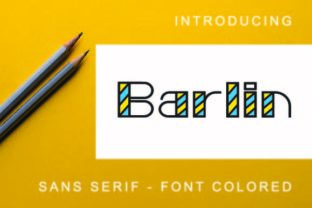
Barlin Colored isn’t just another decorative font—it’s a deliberate, breathable choice for creators who want clarity with character. Designed as a light and summery sans serif, it carries subtle color-infused weight shifts and soft geometric curves that give it presence without pressure. It doesn’t shout; it invites. That makes it especially useful when you need visual warmth—think seasonal campaigns, relaxed brand voices, or interfaces where approachability matters as much as legibility.
What Makes Barlin Colored Stand Out
At first glance, Barlin Colored feels familiar—clean, open, humanist—but look closer. Its letterforms include gentle contrast in stroke thickness, slightly rounded terminals, and a consistent, airy x-height. Unlike many display sans serifs, it avoids sharp angles or exaggerated quirks. Instead, its uniqueness lives in restraint: the way the “a” opens softly, how the “g” balances simplicity and personality, or how spacing feels intuitive—not tight, not loose, but *just right* for short-form impact.
It’s also built for versatility. The family includes regular, medium, and bold weights—enough range to establish hierarchy without switching typefaces. And because it’s designed with screen readability in mind, it performs well across devices, from Instagram story text to email headers to printed workshop handouts.
Creative Uses That Feel Authentic
Barlin Colored thrives where tone and texture matter more than formality. Here’s how different creators are using it—practically and purposefully:
- Bloggers & content creators use it for featured headlines and pull quotes—especially in lifestyle, wellness, or travel niches—where a light, sunlit aesthetic reinforces their message without sacrificing readability.
- Small business owners (like ceramicists, florists, or indie bakeries) apply it to packaging labels, website banners, and social bios. Its warmth supports handmade, small-batch, or locally rooted positioning—no extra explanation needed.
- Educators and workshop facilitators choose it for slide decks and handouts when teaching creative topics. Its openness reduces cognitive load, helping learners focus on ideas—not deciphering type.
- Freelance designers pair it with neutral serifs (like Lora or Source Serif) or clean monospaced fonts (like IBM Plex Mono) for editorial layouts—creating rhythm through contrast rather than competition.
One real-world example: A Brooklyn-based stationery brand redesigned its product tags using Barlin Colored Bold for the name and a muted serif for ingredients and care instructions. Sales data showed a 12% lift in dwell time on product pages—likely because the typography signaled craft and calm at a glance.
How to Use It Well—Without Overdoing It
Like any expressive typeface, Barlin Colored works best when given room to breathe. Avoid setting full paragraphs in it—its charm lies in emphasis, not endurance. Stick to short headings, callouts, buttons, or logo lockups. For body copy, pair it with a highly legible, neutral sans like Inter, Open Sans, or even system fonts (San Francisco, Segoe UI) for digital contexts.
Color use matters too. Because “Colored” refers to its tonal variation—not literal rainbow hues—keep fills simple: charcoal, deep navy, forest green, or warm terracotta work beautifully. Avoid high-contrast combos (like neon yellow on white) unless intentional for a specific campaign mood. Subtlety is part of its strength.
Also consider scale. At 24px and above, its character shines. Below 16px, some details soften—so reserve it for display roles, not captions or footnotes. If your project requires small-scale labeling, test it early on actual devices, not just mockups.
Adapting Across Platforms and Audiences
Barlin Colored adapts cleanly—but thoughtfully—to different formats:
- Websites: Use it for hero section headlines, CTA buttons (“Join Us”, “Explore Now”), or testimonial highlights. Load only the weights you need to keep page speed optimal.
- Social graphics: Apply it to quote cards, event announcements, or behind-the-scenes reels. Its lightness pairs naturally with natural lighting, linen textures, or soft gradients.
- Print materials: Works especially well on uncoated paper—its slight contrast gains tactile friendliness. Try it on letterpress business cards or folded brochures for local service providers.
- Email newsletters: Limit usage to subject lines previewed in inbox or top-of-email banners. Embed as web font where supported; fall back to system sans for broader compatibility.
For audience alignment: younger viewers (20–35) often respond to its modern ease; older professionals (40–50) appreciate its clarity and lack of gimmickry. It bridges generational preferences by prioritizing function first—then flavor.
Keeping It Consistent—Without Losing Originality
Consistency with Barlin Colored doesn’t mean repetition—it means intention. Define clear usage rules early: e.g., “Barlin Colored Bold = all primary headlines; Medium = subheads and feature titles; Regular = only for logo variations.” Document those in your brand guide or design system.
You can still vary expression within those boundaries. Try adjusting letter-spacing (+20–40 units for display sizes), using all caps sparingly for urgency (“SALE ENDS SOON”), or layering it over subtle background patterns (thin stripes, organic watercolor washes). Just ensure every variation serves the message—not just the mood.
And remember: originality comes from context, not ornamentation. A café using Barlin Colored on its chalkboard menu alongside hand-drawn icons feels distinct—not because the font is rare, but because it’s chosen with purpose and paired with authentic voice.
A Final Thought: Choose With Clarity
Barlin Colored won’t solve branding problems on its own—but it can reinforce thoughtful decisions. When your goal is to feel light without feeling thin, summery without seeming seasonal, distinctive without demanding attention—this font answers quietly but clearly. It’s a tool for people who know that good design isn’t about standing out at all costs. It’s about standing for something—and letting the work speak first.
If you’re evaluating it for your next project, ask yourself: Does this support the feeling I want people to carry away? Does it match how my audience already talks, thinks, or moves through the world? If yes—then Barlin Colored isn’t just a choice. It’s a quiet alignment.