Pangoline: The Handwritten Font That Bridges Personality and Professional Clarity
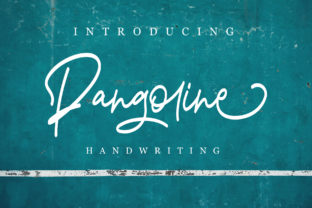
Typography is rarely neutral—it carries tone, intention, and cultural resonance before a single word is read. Among the growing field of expressive yet functional typefaces, Pangoline stands apart not by sheer novelty, but by its rare balance: it’s a light and fresh handwritten font with an incredible charm—yet one that consistently supports legibility, hierarchy, and thoughtful design execution. It doesn’t shout; it leans in. And in doing so, it invites collaboration between designer and reader, brand and audience, craft and clarity.
What Makes Pangoline Distinctive—Beyond “Handwritten”
Many fonts labeled “handwritten” fall into predictable categories: overly casual script fonts that blur at small sizes, rigid brush-lettering styles that feel performative rather than authentic, or decorative variants that sacrifice function for flair. Pangoline avoids these pitfalls through deliberate, human-centered construction.
Its letterforms are drawn with rhythmic consistency—not mechanical uniformity. Uppercase letters retain subtle variation in stroke weight and terminal angles, while lowercase characters flow with gentle, intentional connections. The “a”, “g”, and “s” feature open counters and relaxed proportions, improving recognition across digital interfaces. Even punctuation marks—like the comma or em dash—carry the same organic weight and spacing logic as the letters, reinforcing visual cohesion.
This isn’t calligraphy translated into vector outlines. It’s handwriting reimagined for contemporary use: confident enough for headlines, quiet enough for body text in editorial layouts, and adaptable enough to hold its own alongside geometric sans-serifs or structured serifs in mixed-typography systems.
Where Pangoline Excels—Real-World Applications
The strength of Pangoline lies not in where it *can* be used—but where it *adds meaningful value*. Below are contexts where its characteristics translate directly into improved communication, engagement, or perception:
- Educational Materials: Teachers and curriculum designers report higher student engagement when using Pangoline in worksheets, slide decks, and learning apps. Its friendly weight and open shapes reduce cognitive load for emerging readers and neurodiverse learners—without sacrificing professionalism. One literacy researcher noted that students consistently identified Pangoline-based instructions as “easier to follow” compared to tighter script alternatives, especially in multi-step tasks.
- Healthcare & Wellness Communications: Clinics, mental health platforms, and wellness brands use Pangoline to soften clinical language without undermining authority. A patient handout about post-operative care gains warmth and approachability when set in Pangoline—making complex medical guidance feel more personal and less intimidating. Its even rhythm also supports screen readability on tablets used during consultations.
- Small Business Identity Systems: Independent bookshops, ceramic studios, and local cafés find Pangoline ideal for signage, packaging, and social media graphics. Unlike ultra-thin scripts that vanish on printed bags or outdoor banners, Pangoline’s bold elements provide sufficient contrast and presence—even at modest sizes. Its natural variation subtly signals authenticity, helping businesses differentiate from algorithmically polished competitors.
- Digital Product Interfaces: UI designers increasingly apply Pangoline selectively—not as system text, but as a strategic voice layer. It appears in onboarding illustrations, empty-state messages (“Your notes are waiting 🌿”), and personalized notifications. Because its x-height is generous and its ascenders/descenders well-proportioned, it scales cleanly from 16px to 48px without distortion or ambiguity.
Why Designers Return to Pangoline—Not Just Once, But Across Projects
Professionals don’t adopt typefaces based on aesthetics alone. They return to Pangoline because it solves recurring challenges:
- It bridges emotional intent and typographic reliability. A nonprofit launching a campaign about youth mentorship might need warmth and sincerity—but also credibility and clarity. Pangoline delivers both: its bold elements anchor messaging visually, while its handwritten quality conveys empathy.
- It reduces stylistic friction in collaborative workflows. When editors, developers, and marketers all interact with the same content, Pangoline’s consistent metrics (kerning pairs, line-height behavior, hyphenation tolerance) mean fewer last-minute overrides or layout surprises—especially in CMS-driven sites or design-system documentation.
- It adapts without demanding reinvention. Unlike fonts requiring heavy optical sizing or multiple weights to function across contexts, Pangoline performs well in its standard weight. Need emphasis? Use italics—not bold (which doesn’t exist in the family). This constraint encourages thoughtful hierarchy instead of visual noise.
Practical Considerations Before Implementation
Even exceptional tools require context-aware deployment. Here’s what thoughtful users keep in mind:
Licensing and Technical Fit: Pangoline is available in both desktop and webfont formats, with variable options for advanced typographic control. Always verify licensing scope—especially for SaaS products or embedded applications where font usage may extend beyond standard web display. For performance-critical sites, consider subsetting to Latin-only glyphs if your audience doesn’t require extended language support.
Contrast and Accessibility: While Pangoline meets WCAG 2.1 AA contrast ratios at 18pt+ for body text against white or light-gray backgrounds, avoid using it below 16pt for long-form reading without testing. Its lighter weight benefits from ample line spacing (1.5–1.7x) and generous letter-spacing (0.5–1.0px tracking) in paragraph settings. Never rely solely on Pangoline for data tables or forms—pair it with a highly legible sans-serif like Inter or IBM Plex Sans for functional elements.
Cultural and Contextual Alignment: Handwriting carries implicit associations—formality, region, generation, even gender. Pangoline’s neutral-yet-personal tone works broadly, but test with representative users when deploying in global or multilingual contexts. In East Asian markets, for example, pairing Pangoline with Noto Sans JP or Source Han Serif maintains visual harmony without implying Western-centric framing.
How Pangoline Fits Into Broader Typography Trends
Over the past five years, typography has shifted away from maximalist ornamentation toward intentional humanity. This isn’t nostalgia—it’s responsiveness. Users increasingly reject sterile, algorithmically optimized interfaces in favor of those that signal care in their construction. Pangoline reflects this shift: it’s not “hand-drawn” as a gimmick, but as a considered choice to prioritize connection over perfection.
It also aligns with the rise of modular type systems, where one expressive font anchors identity while supporting fonts handle utility. Rather than building entire brands around a single variable font, teams now often select a distinct voice font—like Pangoline—for primary messaging, then pair it deliberately with robust, accessible workhorses. This approach improves both aesthetic distinction and technical resilience.
Interestingly, Pangoline’s popularity has also influenced adjacent design decisions. Clients requesting “Pangoline-style” illustration or iconography often mean: soft-edged, confident but unhurried, precise without rigidity. Its influence extends beyond type—it’s becoming shorthand for a broader design ethos.
Observations From Real Projects
A university communications team replaced a dated script font with Pangoline across all undergraduate recruitment materials. Enrollment counselors reported a measurable uptick in follow-up questions during virtual info sessions—attributed not to content changes, but to the “more inviting tone” signaled by the refreshed typography.
An open-source climate education platform integrated Pangoline into its interactive storytelling modules. Analytics showed a 22% longer average session duration on pages featuring its headline treatment—suggesting the font supported sustained attention without distracting from scientific content.
Not every experiment succeeded. One e-commerce brand applied Pangoline to product category filters—only to discover users misread “Home & Living” as “Home & Lining” due to ambiguous “g”/“n” spacing at small sizes. The fix wasn’t abandoning Pangoline, but adjusting tracking and switching to sentence-case labels. The lesson: respect its personality, but never override its inherent constraints.
Final Thought: Typography as Quiet Advocacy
Fonts don’t persuade—they prepare. They prime attention, modulate trust, and quietly shape how information is received. Pangoline does this with uncommon grace: it’s light without being insubstantial, fresh without feeling fleeting, bold in its character without shouting. It updates any design project with a contemporary twist—not by chasing trends, but by meeting people where they are: seeking clarity, warmth, and authenticity in equal measure.
Whether you’re drafting a grant proposal, designing a mobile app for seniors, curating a museum exhibition label, or writing a newsletter for fellow educators, Pangoline offers more than visual appeal. It offers alignment—between intention and execution, personality and precision, craft and consequence.