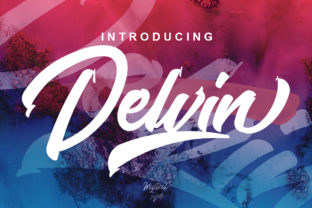
Delvin
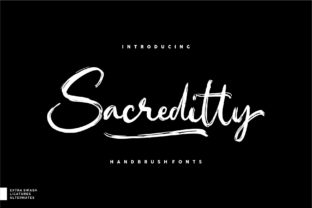
Imagine a font that doesn’t just say something—but *announces* it with confidence, rhythm, and unmistakable character. That’s Delvin: a bold handwritten typeface rooted in authenticity, shaped by urban energy, and elevated by expressive swashes that breathe life into every letterform. More than a decorative choice, Delvin is a strategic visual asset—designed for designers who understand that typography is one of the most powerful tools in branding and communication.
Why Delvin Stands Out in Modern Visual Design
In an era saturated with minimalist sans-serifs and overused script fonts, Delvin offers a rare balance: raw expressiveness paired with professional polish. Its hand-drawn foundation gives it warmth and human imperfection—qualities that foster trust and relatability—while its deliberate weight, contrast, and dynamic terminals ensure clarity and impact across sizes and mediums. Unlike generic handwriting fonts, Delvin’s swashes are purpose-built: they flow naturally, connect intuitively, and enhance—not distract from—the message.
This makes Delvin especially valuable in projects where personality and differentiation matter. Whether you’re developing a new brand identity or refreshing an existing one, Delvin can anchor your visual language with authenticity and attitude—without sacrificing legibility or versatility.
Practical Applications Across Creative Disciplines
Delvin thrives where visual hierarchy meets emotional resonance. Here’s how it elevates real-world design work:
- Branding & logo design: Use Delvin’s primary glyphs for logotypes that feel personal yet professional—ideal for lifestyle brands, creative studios, boutique retailers, or food & beverage labels seeking approachability with edge.
- Social media graphics & digital marketing: Its strong silhouette ensures readability even at small sizes on mobile feeds; pair it with a restrained sans-serif for captions to maintain balance and focus.
- Editorial design & packaging: Apply Delvin selectively—to headlines, pull quotes, or limited-edition product names—to create moments of visual punctuation that guide the eye and elevate perceived value.
- Web & UI design: While best reserved for display use (headings, hero sections, CTAs), Delvin adds distinctive flavor to landing pages, portfolio sites, or campaign microsites—especially when paired with accessible web-safe fallbacks and proper font loading strategies.
- Presentation decks & merchandise: From keynote slides to tote bags and enamel pins, Delvin translates seamlessly into both digital and physical formats, reinforcing brand recognition through consistent, memorable expression.
What sets Delvin apart isn’t just aesthetics—it’s intentionality. Each glyph was crafted to support visual hierarchy, not undermine it. Its x-height is generous, its ascenders and descenders controlled, and its spacing calibrated for rhythm—not randomness. That means less manual kerning, fewer layout surprises, and more time spent refining strategy instead of fixing technical hiccups.
When integrating Delvin into an existing brand system, consider pairing it thoughtfully. A clean, neutral sans-serif (like Inter, Poppins, or Montserrat) provides excellent contrast and supports accessibility. Complement it with a cohesive color palette—one that reflects your brand’s voice without competing for attention. Avoid overcrowding layouts; let Delvin shine in focused, high-impact moments rather than extended body text.
Also keep audience expectations in mind. Urban, youthful, or artisanal markets often respond strongly to Delvin’s confident informality—but enterprise B2B contexts may require subtler application (e.g., as a secondary accent rather than a headline staple). Always test scalability: does it retain its character at 24px on screen? Does it hold up when embossed on kraft paper or laser-cut on wood?
Ultimately, choosing a font like Delvin signals a commitment to craftsmanship and clarity—not just style. It reflects an understanding that great graphic design doesn’t shout louder; it communicates smarter, connects deeper, and endures longer. When every pixel, stroke, and space serves both aesthetic and functional intent, your creative projects don’t just look good—they resonate, persuade, and endure.