Arumdalu: A Stylish Handwritten Font for Everyone
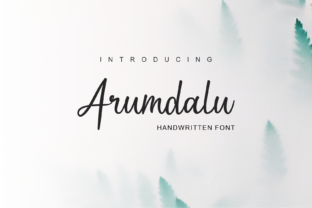
Arumdalu is a friendly, hand-drawn typeface that feels personal without trying too hard. It’s not overly decorative or fussy—just clean, confident, and quietly expressive. If you’ve ever admired the warmth of real handwriting but needed something polished enough for professional use, Arumdalu fits right in.
What Makes Arumdalu Stand Out
At its core, Arumdalu is simple—but simplicity here isn’t minimalism for its own sake. Each letter has gentle curves, consistent spacing, and subtle variation that mimics natural pen movement. That gives it authenticity without sacrificing readability. Unlike many handwritten fonts that blur into illegibility at smaller sizes, Arumdalu stays clear even in body text or tight layouts.
It’s also designed to be easy to remember—not just visually, but functionally. The lowercase a, g, and y have distinctive yet familiar shapes. You won’t need a font guide to recognize it after seeing it once or twice. That memorability matters when building a brand, designing learning materials, or crafting social posts people scroll past in seconds.
Why People Choose Arumdalu
Most users don’t search for a font because they love typography. They search because they want their message to feel human, approachable, or intentional. Arumdalu helps with that—without requiring design experience.
A small business owner might use it for a café menu because it conveys care and craft. A teacher could apply it to classroom posters to soften academic content and invite engagement. A blogger writing about wellness or creativity may choose Arumdalu for headings—it adds warmth without distracting from the words.
Even professionals who work with strict brand guidelines sometimes turn to Arumdalu for secondary elements: email signatures, internal slide decks, or workshop handouts. It bridges the gap between “corporate” and “caring”—a quiet way to signal values like sincerity and accessibility.
Real-Life Uses You Can Try Today
- Social media graphics: Pair Arumdalu headlines with clean sans-serif body text for Instagram quotes, Pinterest pins, or LinkedIn banners.
- Printed materials: Use it on greeting cards, recipe cards, or event invitations where personality matters more than formality.
- Digital interfaces: Apply it sparingly in UI elements like call-to-action buttons or feature highlights—just enough to add character without hurting usability.
- Educational tools: Design worksheets, flashcards, or progress trackers with Arumdalu to reduce visual fatigue and support focus—especially for younger learners or neurodiverse audiences.
- Personal branding: Freelancers in coaching, therapy, or creative fields often use Arumdalu in logos or website headers to reflect empathy and individuality.
Where Arumdalu Fits—and Where It Doesn’t
Because it’s versatile, Arumdalu works across many contexts—but versatility doesn’t mean universality. It shines where tone and connection matter most. It’s less ideal for legal disclaimers, technical documentation, or data-heavy dashboards where neutrality and precision are top priorities.
You’ll also want to consider pairing. Arumdalu pairs beautifully with straightforward sans-serifs (like Inter, Open Sans, or Lato) and some soft serifs (such as Merriweather or Cormorant Garamond). Avoid clashing with other handwritten or highly stylized fonts—two expressive faces together can compete instead of complement.
Practical Tips Before You Start
- Check licensing early. Arumdalu is free for personal use, but commercial projects—including client work, merch, or apps—require a license. Always verify permissions before launching anything public.
- Test at different sizes. While readable down to ~14px in headings, avoid using it below 16px for body copy. Its charm lives in its rhythm—not tiny details.
- Use OpenType features if available. Some versions include alternate characters or ligatures. These aren’t essential, but they add nuance—like swapping a standard f for a more flowing version in titles.
- Think about contrast. Arumdalu performs best against light or muted backgrounds. On dark themes, ensure sufficient weight and spacing—sometimes a bolder cut or slight tracking adjustment helps.
- Don’t overuse it. Like any expressive font, its impact grows when used selectively. One strong headline in Arumdalu often says more than three paragraphs set entirely in it.
Who Benefits Most From Arumdalu
If you’re someone who values clarity but dislikes coldness—or creativity but not chaos—Arumdalu meets you in the middle. It’s especially helpful for:
- Beginners learning design basics: No need to master kerning or hierarchy rules to get good results. Arumdalu does much of the emotional lifting.
- Small teams with limited resources: It adds polish fast—no custom illustration or complex animation needed to stand out.
- Content creators balancing authenticity and professionalism: Whether filming YouTube shorts or drafting newsletters, Arumdalu supports voice without overshadowing substance.
- Educators and trainers: Its legibility and friendliness help lower cognitive load—making information easier to absorb and retain.
- Hobbyists and makers: From Etsy shop banners to DIY project labels, Arumdalu makes handmade efforts feel intentional and finished.
What’s refreshing about Arumdalu isn’t that it solves every typographic challenge—it’s that it solves common ones well. It doesn’t demand attention; it earns it. And that’s rare.
You don’t need special software to use it either. It works in Canva, Google Docs (via upload), Figma, Adobe Creative Cloud, and most modern design or publishing tools. Installation takes seconds. Experimentation takes minutes. Finding the right place for it? That often happens intuitively—when something just feels *right*.
Ultimately, Arumdalu isn’t about chasing trends. It’s about choosing a tool that reflects how you want people to feel when they see your work: seen, welcomed, and gently invited in.